Paid Advertising
      • # Channel Readiness Assessment
      • # Context Targeting
      • # Conversational Creative
      • # Research-Stage Landing Pages
      • # Paired With GEO & AEO

ChatGPT Ads

Paid Advertising
      • # Channel Readiness Assessment
      • # Context Targeting
      • # Conversational Creative
      • # Research-Stage Landing Pages
      • # Paired With GEO & AEO
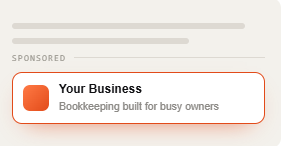
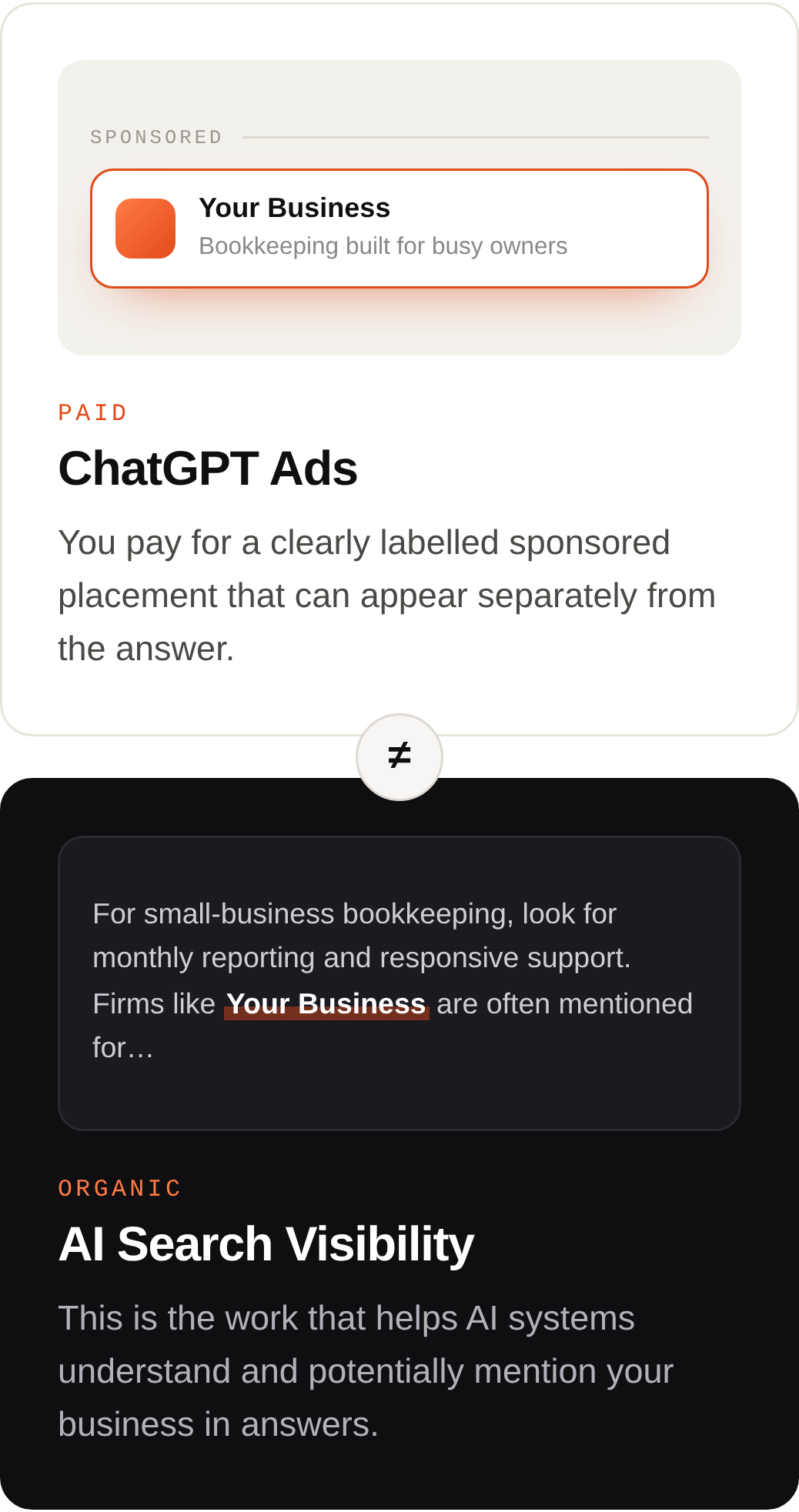
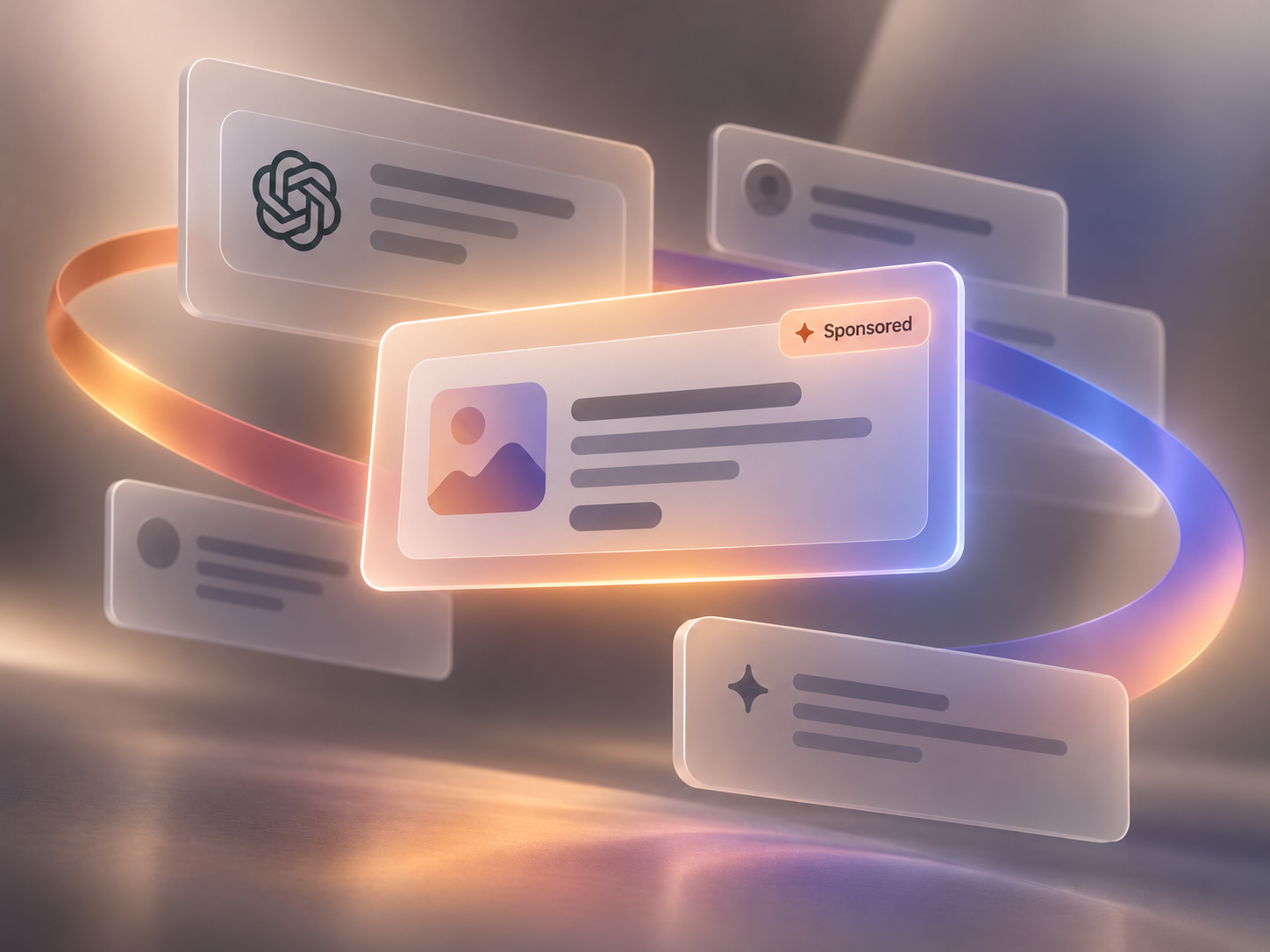
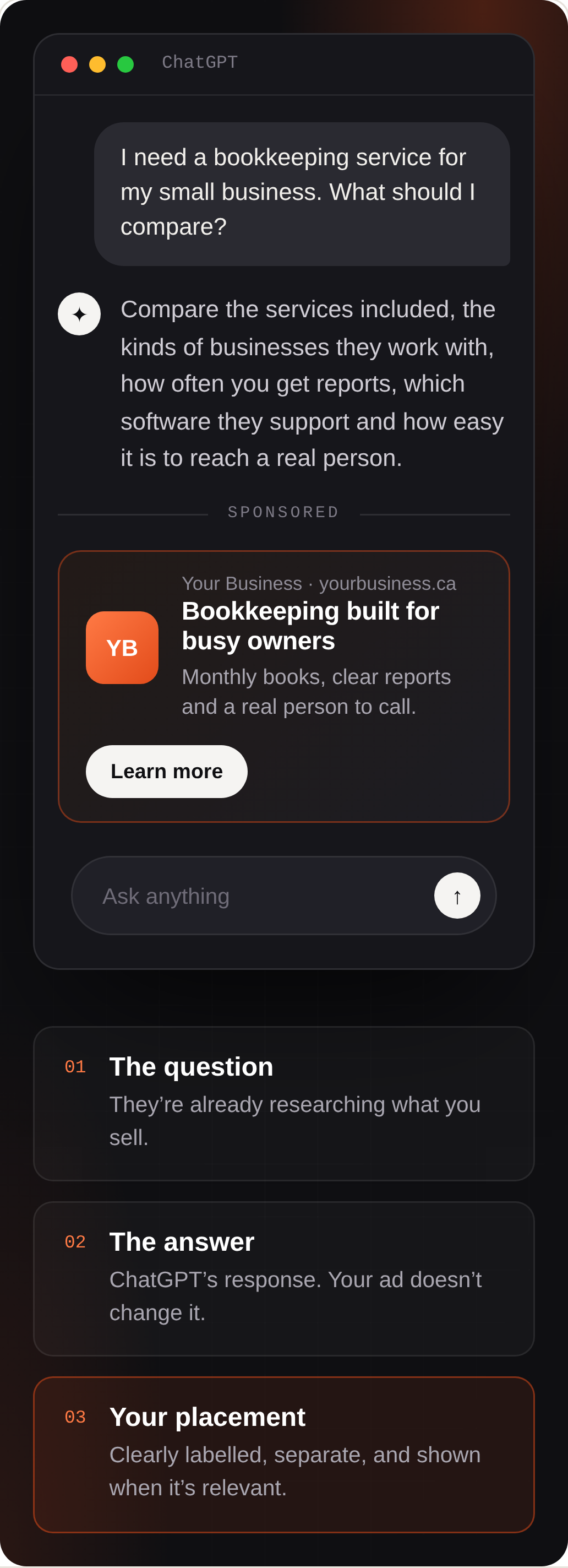
Concept visual. In the current ChatGPT experience, sponsored ads appear below a response, clearly labelled and separate from the answer.

Be there while people are deciding

Channel Readiness Assessment
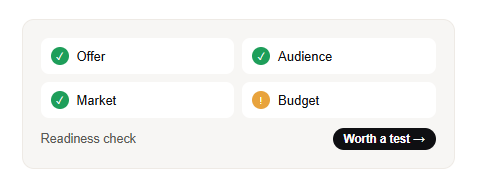
First, we check whether ChatGPT Ads make sense for your business, audience and budget.
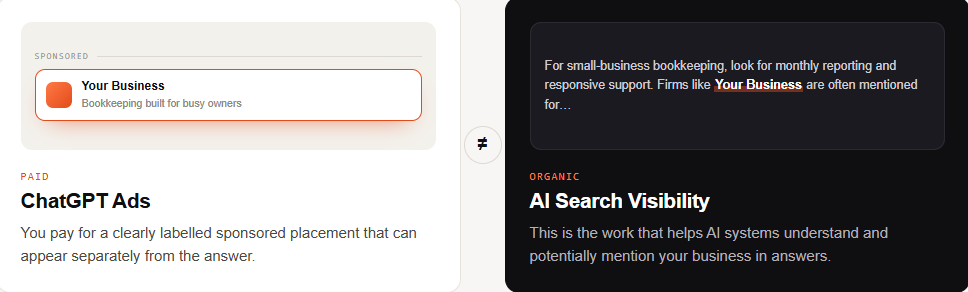
People use ChatGPT to research, compare options and decide what to do next. ChatGPT Ads give businesses a paid way to appear during those moments.

The ad is clearly labelled and kept separate from the ChatGPT answer. Paying for an ad does not change what ChatGPT says.

What showing up actually looks like

Conversational Creative
The ad needs to feel clear and useful inside a conversation, not like a banner dropped into the page.
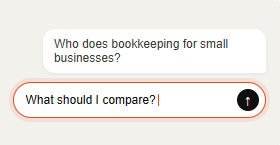
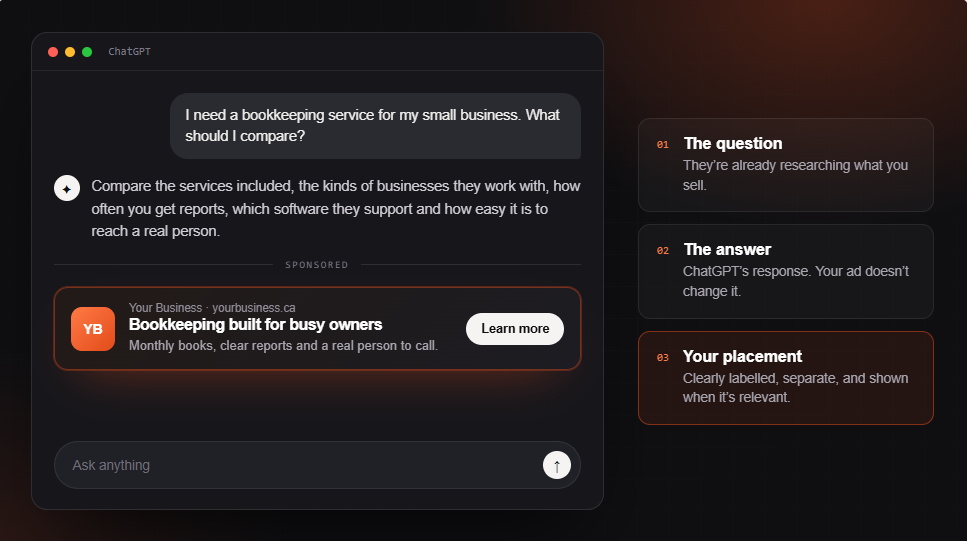
Someone asks a question. ChatGPT gives an answer. If a relevant ad is available, a sponsored placement can appear below the response.
The important part is the timing. The person is already asking about something related to what you sell.
  1. 01
    The questionThey’re already researching what you sell.
  2. 02
    The answerChatGPT’s response. Your ad doesn’t change it.
  3. 03
    Your placementClearly labelled, separate, and shown when it’s relevant.
The important part is the timing. The person is already asking about something related to what you sell.

Context matters more than one keyword

Context Targeting
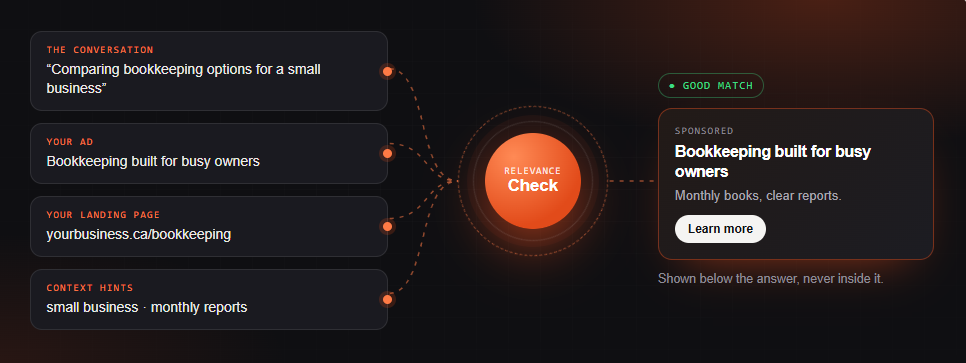
We focus on the meaning of the conversation, not just a single keyword.
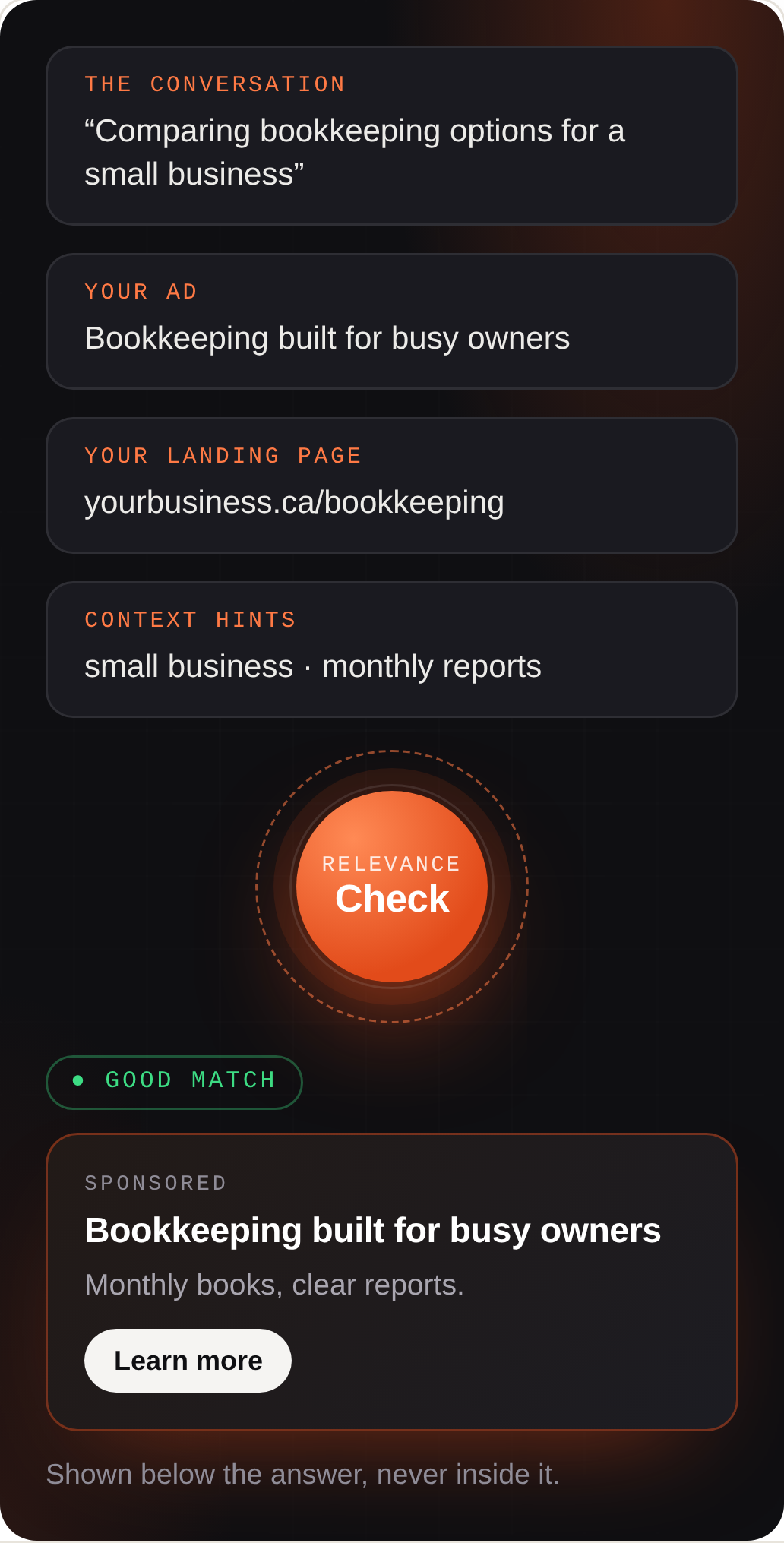
ChatGPT's ad system can consider the context and intent of the current conversation, along with the ad and landing page.

We can also provide context hints to explain when an offer may be useful. These hints guide matching, but they do not let us choose exact conversations or exact match keywords.
Think context, not exact match. The goal is to give the system clear signals about when your offer may be useful.
The strategy still needs people behind it. We plan the offer, message, landing page and campaign structure so every part has a clear job.

How the journey plays out

The path is easy to understand.

01

They ask

Someone uses ChatGPT to research a problem, product or service.
02

Your ad appears

If it is relevant, a clearly labelled sponsored placement can appear below the answer.
03

They take the next step

The person can click through to learn more, compare your offer or contact you.
01

They ask

Someone uses ChatGPT to research a problem, product or service.
02

Your ad appears

If it is relevant, a clearly labelled sponsored placement can appear below the answer.

03

They take the next step

The person can click through to learn more, compare your offer or contact you.

What you actually get

A new paid channel for reaching people while they are actively exploring choices and making decisions.
01

Reach people during research

Your ad can appear while someone is already thinking about a problem your business can help solve.
Why it matters: You show up closer to the decision, instead of interrupting someone who was doing something else.
01

Match the moment more naturally

The ad system can consider more than one exact keyword when deciding whether an ad is relevant.
Why it matters: Your message can fit the situation the person is already exploring.
01

Test a new paid channel

ChatGPT Ads can sit alongside Google Ads and other channels instead of replacing them.
Why it matters: You can test where it adds value without rebuilding your whole advertising plan.
01

Keep the experience clear

Sponsored placements are labelled and kept separate from ChatGPT answers.
Why it matters: Paid visibility and organic AI visibility stay two different things.

What we build

We keep the campaign simple and useful. First we decide whether the channel makes sense for your business at all.
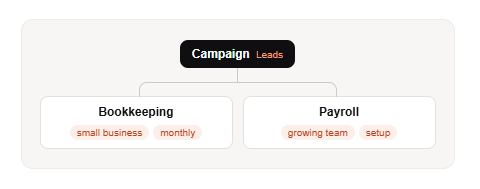
Check the fit
/001

We look at your offer, audience, market and budget first. If the channel is not a good fit, we tell you.
Build the campaign
/002

We set the goal, budget, ad groups, context hints and campaign structure in Ads Manager.
Create the message
/003

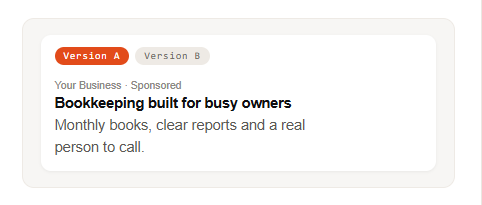
We write ads that feel useful in a research conversation and connect them to a clear landing page.
Launch and improve
/004

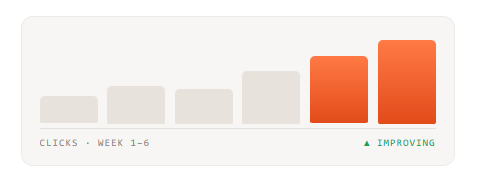
We watch impressions, clicks, spend and other available performance signals, then improve the campaign using real data.
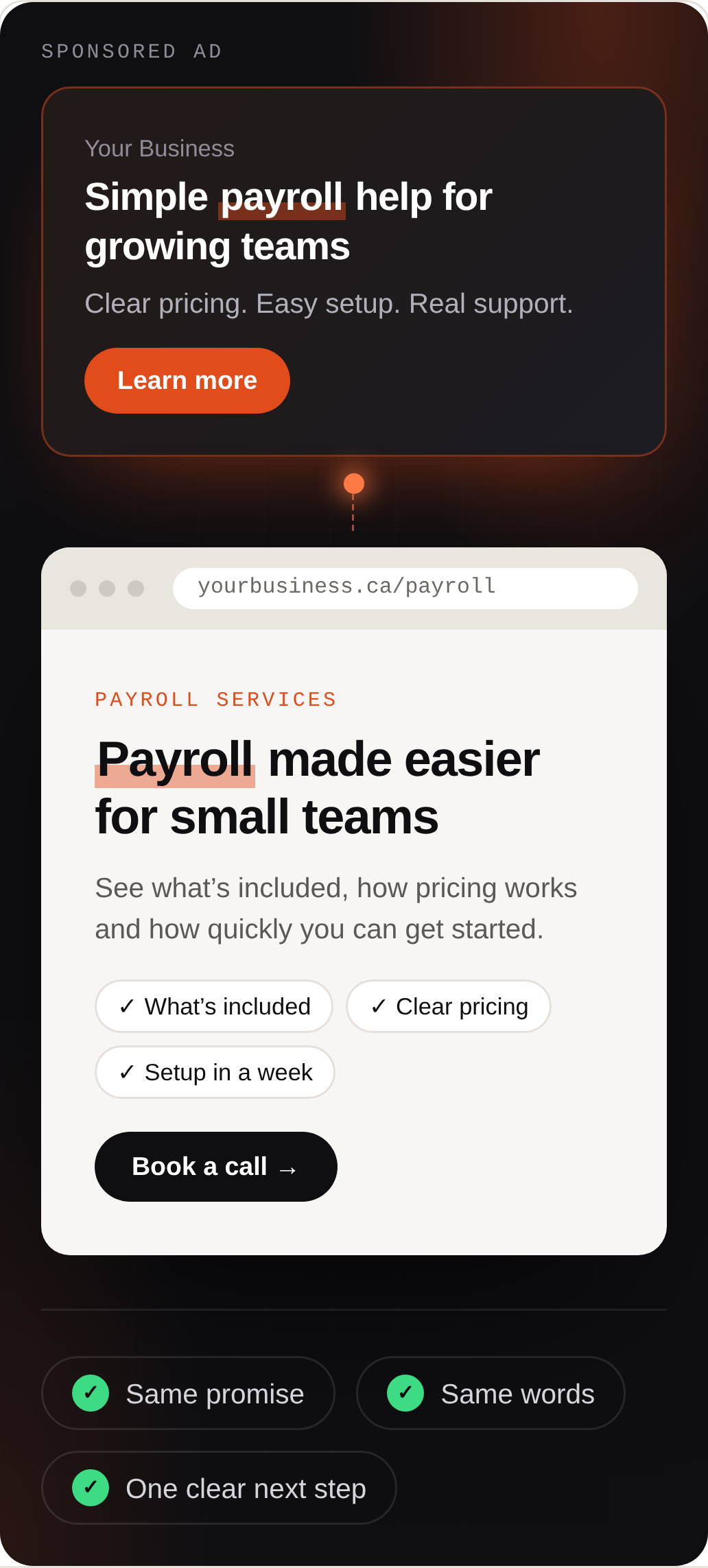
The click still has to go somewhere useful

Research Stage Landing Pages
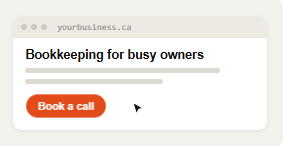
The landing page should help someone who is still researching understand the offer and take the next step.
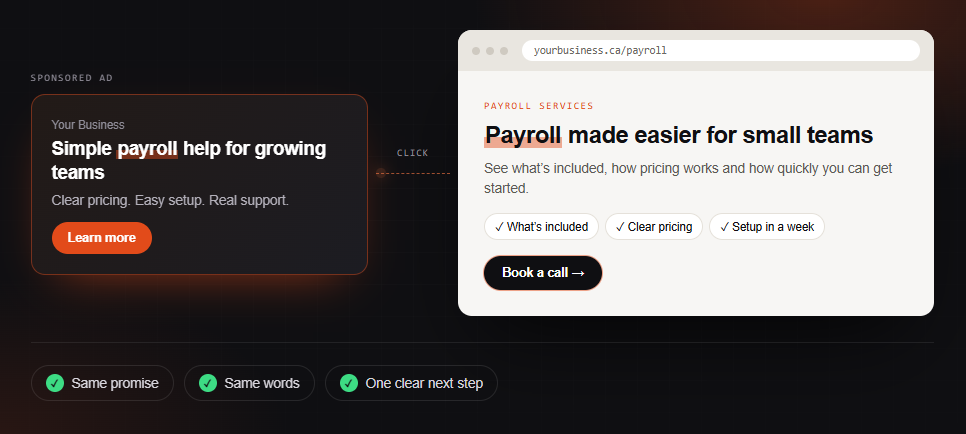
A relevant ad is only the first step. The landing page needs to answer the same question clearly and make the next action easy.
Keep the message connected. The ad and the landing page should feel like one clear path, not two different conversations.

What lands in your inbox every month

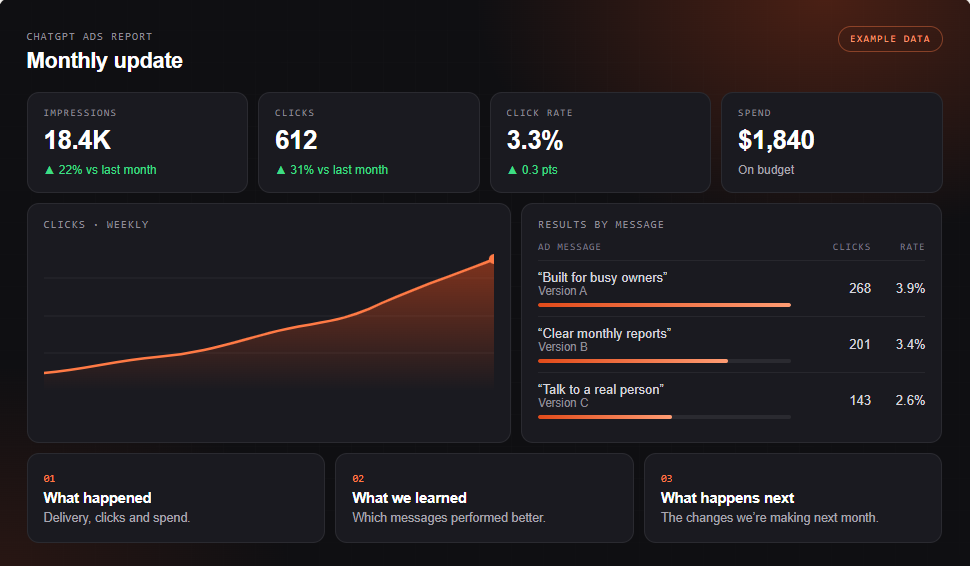
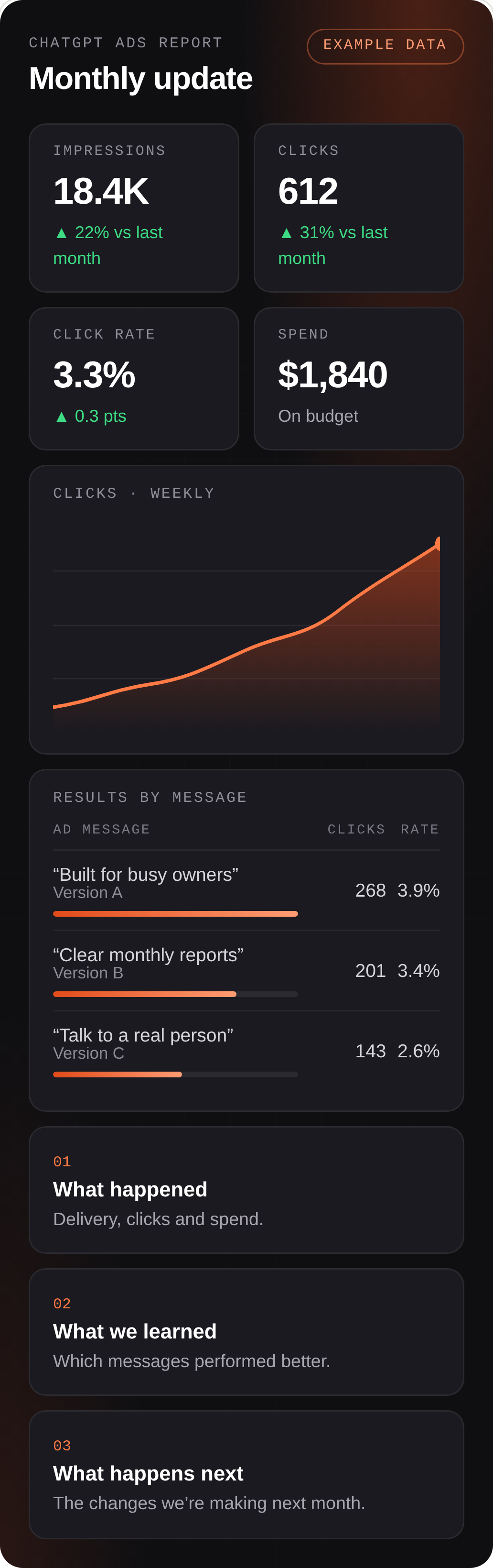
Clear reporting on what the campaign delivered, what it cost and what we are changing next.
Reporting should help you make decisions. The numbers shown above are example data. Your report should clearly explain what happened, what it cost and what we are changing next.
Need your input?
If we need a decision from you, it goes at the top of the report.

Paid ads and ChatGPT answers are separate

Paired With GEO & AEO
Paid placement and organic AI visibility are different. We can use both as part of the same wider AI search strategy.
This is important. Buying an ad does not change what ChatGPT says about your business.
Also important:
Advertisers do not receive people's ChatGPT conversations or personal details from ChatGPT. Campaign reporting includes ad performance metrics such as impressions, clicks and spend.
FAQ

Answered questions.

Everything you might want to know about ChatGPT Ads, up front.

1
Are ChatGPT Ads available in Canada?
Yes. Canada is currently listed as available for self service access to OpenAI Ads Manager.
2
Where do the ads appear?
Ads can appear below a ChatGPT response. They are clearly labelled as sponsored and kept separate from the answer. Ads may appear to eligible Free and Go users, while paid plans such as Plus, Pro, Business, Enterprise and Edu do not show ads.
3
Does paying for an ad change the ChatGPT answer?
No. Ads do not influence ChatGPT answers. Paid placement and organic AI visibility are separate.
4
How does ChatGPT decide which ad to show?
The system can consider the current conversation, the ad, the landing page, advertiser context hints and other allowed signals. Context hints help guide matching, but they do not guarantee delivery in a specific conversation.
5
Do advertisers see people's conversations?
No. OpenAI says advertisers do not receive people's chats, chat history, memories or personal details. Advertisers receive campaign performance information instead.
6
Should ChatGPT Ads replace Google Ads?
We usually treat ChatGPT Ads as another channel to test alongside Google Ads and other proven marketing. We keep investing where the results justify it.
7
How are ChatGPT Ads bought?
OpenAI Ads Manager currently supports CPM and CPC buying options, depending on the campaign objective.
Free channel readiness check

Let’s get you into
the conversation.

We’ll check whether ChatGPT Ads fit your business, audience and budget. If they don’t, we’ll tell you straight.